
The Teochew Store Blog / travel
Making the Swatow famous Lao Ma Keng Rice-Dumplings 老妈宫粽球做法
The traditional Teochew rice dumpling is called the zanggiu ("dumpling ball"). It is unique as it comes in three types of taste: salty, sweet and sangpeng, that is a combination of both salty and sweet.
In Swatow there is a stall that has been selling its rice dumplings since the 1920s. Known as the Lao Ma Geng Zanggiu, after a nearby old temple, the stall is a household-name in Swatow. This week we bring to you a video showing how its rice-dumplings are made (read more for steps and list of ingredients)
Through the Eye of a Master Photographer (II) - 1949 the Historical Year of Liberation

"Jubilation" would hardly seem like the correct word to describe the mood of the masses when Mao Zedong's Red Army marched into the Teochew region in 1949. After all the Teochews are a people known above all for their business acumen and the chief port Swatow was China's shining model of capitalistic and modern progress in the 1930s.
Yet beaming jubilation was the very emotion shown on many faces captured by the camera of photographer Hang Tsi-kuang in the historical year of liberation. Gripped by intense fear for their livelihood as the value of the money in their pockets plummeted each day under the Kuomintang government, hope was all the common people looked for. In their eyes the triumphant entry of the communists was not the takeover of a peasant army, but about them becoming part of an army of peasants to change the world order
Through the Eye of a Master Photographer (I) - 15 Vivid Images of Life around the Teochew Region in 1948

Principal Resident Surname(s) in Largest Teochew Villages - a non-exhaustive list

Teochew Celebration of the Chinese New Year in Pictures【光影潮州】乡里热闹的春节

For the Teochews, the Chinese New Year is the grandest and most important festive period. All across the Teochew region, people mark the occasion with activities strongly rooted in local tradition. Through the camera lens of avid photographer Ling Shyue Miin, we bring you a series of extraordinary images capturing how villages in Teochew welcome the Year of the Monkey.
在潮州传统的节日中,春节是最热闹、最受潮州人重视的节日。作为农历一年中的第一个大节,潮州地区有着许多别具特色的民俗文化活动。2016猴年春节,资深摄影师凌学敏走访了许多潮州村庄,用相机记录下了乡村里热闹的春节。
New Direct Flight from Kuala Lumpur to Swatow Announced

Amidst the cheers of the ongoing Chinese New Year celebrations, Malaysian budget airline AirAsia has announced the launch of a four-times weekly direct flight from Kuala Lumpur to Swatow. Operations of the route will commence from March 25, 2016 and is expected to boost family visitations between Teochews in Malaysia and China.
The Chaoshan Jieyang International Airport, which serves the Teochew region, is currently connected internationally to Singapore (Jetstar), Bangkok, Hong Kong and Taipei (China Southern Airlines), and domestically to a host of major cities in mainland China, including Guangzhou, Shanghai and Beijing.
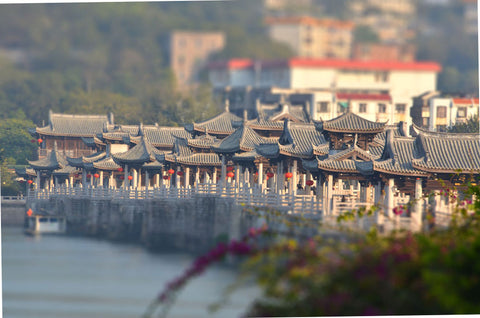
The Bridge We Must Have All Seen - Its Stories & Photos Through the Years
Watch: Rare video footages of early 1990s Teochew 八千里路云和月 潮州
Taiwanese travel programme featuring rare footages of early 1990s Teochew 潮州. In Mandarin, with some interviews in Teochew and English subtitles.